






Choosing the best furnace brand in British Columbia is not simply a matter of buying the cabinet with the highest efficiency number or the longest list of features. A furnace is one component of a complete heating system, and its real-world performance depends on correct sizing, ductwork, airflow, venting, controls, commissioning, maintenance and local service support.
For homeowners in Vancouver and the Lower Mainland, several established manufacturers offer suitable equipment. The best choice is the specific model that fits the home’s heating load, comfort goals, mechanical space, existing duct system, budget and future plans for air conditioning or a heat pump.
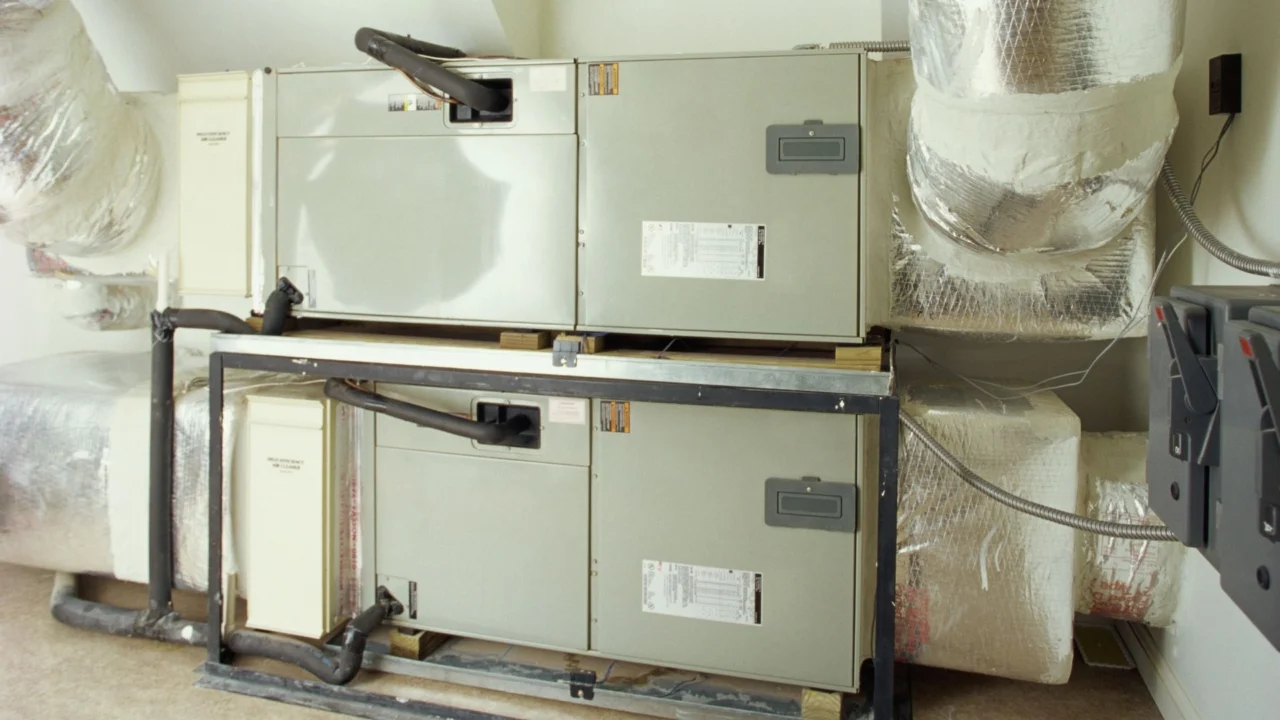
Quick answer: Carrier, Lennox, Trane, American Standard, Goodman, Amana, Rheem, Ruud, Bryant, KeepRite, Heil, York, Coleman, Tempstar, Daikin, Ameristar, Payne, Ducane and Continental can all be reasonable choices when the model is properly selected and professionally installed. For many BC homes, a correctly sized two-stage condensing furnace with an efficient blower provides a practical balance of comfort, efficiency, noise control and serviceability. The brand name matters, but installation quality and local parts support often matter more.
Best Furnace Brands in BC: Practical Comparison
The table below is a starting point rather than a universal reliability ranking. Product lines, controls, warranties and availability change, so the final comparison should always be made at the model level.
What Makes a Furnace Suitable for a BC Home?
British Columbia does not have one uniform heating climate. A furnace selected for a compact home in Vancouver may not be appropriate for a larger property in the Fraser Valley or a home with a longer heating season in the Interior. Even within Metro Vancouver, building age, exposure, insulation, window area and air leakage can produce very different heating loads.
Coastal conditions
Lower Mainland winters are often moderate but damp. Long periods of part-load operation make quiet low-stage heating, good airflow control and proper condensate drainage particularly valuable.
Older housing stock
Many homes have renovated or extended duct systems. Return-air restrictions, undersized branches and high-resistance filters can limit the performance of even premium equipment.
Limited mechanical space
Venting routes, service clearances, filter access, drain locations and future cooling coils must be planned before the furnace is ordered.
Future electrification
Homeowners who may add a heat pump should consider blower capability, coil space, electrical capacity and thermostat strategy when replacing the furnace.
A proper recommendation considers the complete property: calculated heat loss, conditioned floor area, insulation, windows, air leakage, duct layout, desired indoor temperature, mechanical-room constraints and the occupants’ comfort priorities.
Understanding AFUE and Furnace Efficiency
AFUE stands for Annual Fuel Utilization Efficiency. It is a standardized seasonal measure used to describe how effectively a furnace converts fuel into useful heat. A higher AFUE rating indicates lower modeled fuel loss, but AFUE does not measure duct leakage, electrical use by the blower, installation quality or how well the furnace is sized for the home.
For example, a high-AFUE furnace can still deliver disappointing results when it short-cycles, operates against excessive duct pressure or is connected to poorly sealed ductwork. Conversely, a well-selected furnace with slightly lower rated efficiency may provide better comfort and lower total ownership cost if it is simpler to service and properly matched to the building.
Important: Compare usable heating output, not input capacity alone. A furnace’s input rating describes fuel consumption at full fire; its output rating accounts for the unit’s rated efficiency.
Is the highest AFUE always worth the additional cost?
Not automatically. The financial value of a premium-efficiency model depends on the home’s annual heating demand, local energy prices, the price difference between models, expected ownership period and whether the premium unit includes comfort features that the homeowner will actually use.
For many Lower Mainland homes, the difference between a basic single-stage system and a properly controlled two-stage system may be more noticeable than a small difference between two high AFUE ratings.
Single-Stage, Two-Stage and Modulating Furnaces
Single-stage furnace
A single-stage furnace normally operates at full heating input whenever there is a call for heat. It can be a sensible choice for a smaller home, rental property or budget-focused replacement when the unit is accurately sized and the duct system is suitable.
- Advantages: Lower initial cost, simpler controls and straightforward service.
- Limitations: More noticeable starts and stops, greater temperature variation and higher airflow during every heating cycle.
Two-stage furnace
A two-stage furnace can operate at a lower firing rate during milder conditions and move to high stage when the building requires more heat. Because a home needs its full design heating capacity only during colder conditions, low-stage operation can provide longer cycles and steadier comfort during much of the season.
- Advantages: Quieter operation, more even temperatures and reduced reliance on full-capacity cycles.
- Best application: Many detached homes and townhomes where comfort is important but a premium modulating system is not necessary.
Modulating furnace
A modulating furnace can adjust heat output through a wider range. When correctly designed and commissioned, it can maintain indoor temperature with long, low-output cycles.
- Advantages: Precise comfort, smooth airflow and low operating sound.
- Considerations: Higher equipment cost, more sophisticated controls and potentially more expensive electronic components.
Burner staging and blower speed are related but not identical. A furnace may have a two-stage burner with a constant-torque blower, or a staged or modulating burner with a variable-speed blower. The quotation should state both.
Blower Motors and Airflow Control
The blower moves conditioned air through the home. Its motor and control strategy affect sound, temperature distribution, electrical consumption, filtration performance, air-conditioning operation and heat-pump compatibility.
Constant-torque ECM blower
A constant-torque electronically commutated motor is common in modern entry-level and mid-range furnaces. It can provide better electrical efficiency and more consistent airflow than older basic motor designs, but it does not offer the full range of control associated with a variable-speed system.
Variable-speed ECM blower
A variable-speed blower can be programmed for different operating modes and can gradually ramp airflow up or down. This can improve perceived sound, circulation and cooling dehumidification. It is also useful in carefully designed zoning and dual-fuel applications.
No motor can fully correct undersized ductwork. If the system has inadequate return air, restrictive fittings or an unsuitable filter, a stronger blower may increase noise without solving the underlying problem.
Why Furnace Sizing Matters More Than the Logo
Replacing an old furnace with another unit of the same input capacity is not a reliable sizing method. Older equipment was often oversized, and renovations may have changed the building’s heat loss. New windows, insulation and air sealing can reduce the required capacity; additions or altered ductwork can change it in the opposite direction.
Problems caused by oversizing
- Short heating cycles and frequent starts
- Hot and cold areas within the home
- More noticeable airflow and equipment sound
- Reduced benefit from staged or modulating operation
- High-temperature-limit faults when airflow is restricted
- Additional wear on ignition and control components
Problems caused by undersizing
- Difficulty maintaining the desired temperature during design weather
- Continuous high-stage operation
- Slow temperature recovery after setbacks
- Limited reserve capacity when doors are frequently opened or unusual loads occur
The contractor should calculate or carefully evaluate the building heating load and compare it with the furnace’s rated output. The goal is not the largest furnace that fits the duct opening; it is the smallest appropriate output that can meet the design load with a reasonable margin.
Ductwork, Filters and Static Pressure
A forced-air furnace is both a combustion appliance and an air-moving appliance. The duct system must carry the required airflow without creating excessive resistance.
Total external static pressure is the resistance the blower must overcome outside the furnace cabinet. It is affected by supply ducts, return ducts, filters, evaporator coils, dampers, registers and fittings. High static pressure can reduce airflow, increase noise, raise furnace temperature and shorten blower life.
Before recommending premium equipment, a thorough assessment should consider:
- Supply and return duct dimensions
- Return-air grille and filter area
- Filter type, thickness and resistance
- Existing air-conditioning coil condition
- Closed, blocked or undersized registers
- Zone dampers and bypass arrangements
- Duct leakage and unconditioned-space losses
- Available airflow for future cooling or heat-pump operation
High-filtration products should be selected with airflow in mind. A filter with greater particle capture can also create greater resistance if the cabinet is too small or the filter is not replaced on schedule.
Condensing Furnaces, Venting and Condensate Drainage
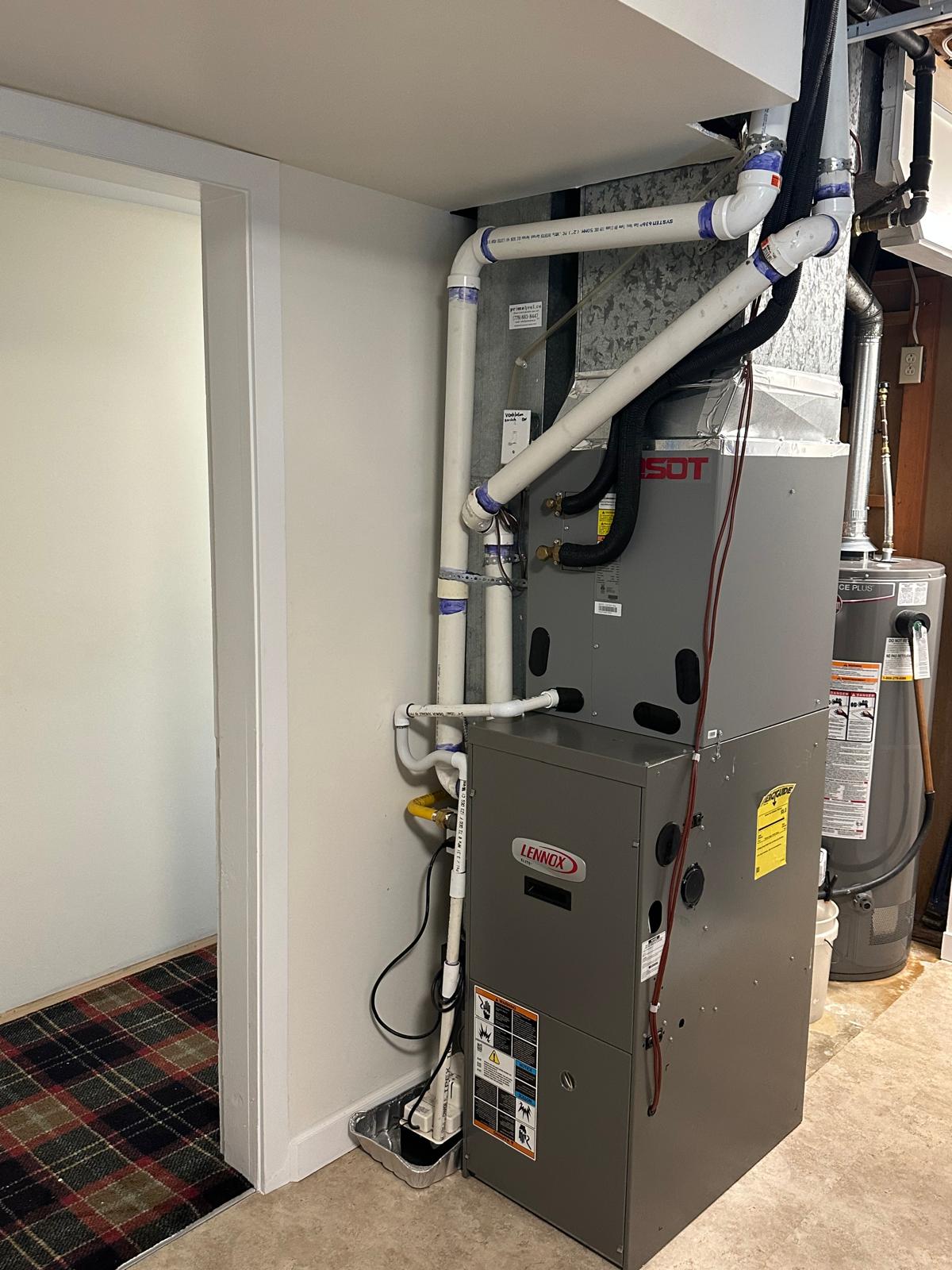
Most modern high-efficiency gas furnaces are condensing appliances. They recover heat from combustion gases and produce liquid condensate that must be drained correctly. They commonly use dedicated intake and exhaust piping instead of relying on a conventional chimney.
A professional installation must account for:
- Approved venting materials and pipe diameter
- Manufacturer limits for equivalent vent length
- Correct pipe support and slope
- Intake and exhaust termination clearances
- Prevention of exhaust recirculation
- Condensate traps and accessible drains
- Freeze protection where piping enters cold areas
- Drain neutralization where applicable
- Future access for cleaning and repair
Gas-appliance replacement and alteration work may require permits from Technical Safety BC or the applicable local authority. Permit responsibility, commissioning and documentation should be confirmed in writing before work begins.
Furnace Brands Covered in This Guide
The manufacturers below are listed in neutral text for equipment identification and comparison. No manufacturer logo, advertising artwork, slogan or proprietary brand styling is reproduced.
- Carrier
- Trane
- Lennox
- Goodman
- Rheem
- Bryant
- American Standard
- York
- Heil
- Amana
- Ruud
- Ameristar
- KeepRite
- Daikin
- Coleman
- Tempstar
- Payne
- Ducane
- Continental
Furnace Brand Guidance for BC Homeowners
The following sections provide practical purchasing guidance. Brand and model availability should be confirmed when requesting a quotation.
Carrier furnaces
Carrier offers equipment across standard, staged and premium comfort categories. It is often considered when the homeowner wants coordinated controls, variable-speed airflow or future integration with a compatible cooling or heat-pump system.
Best fit: Homeowners seeking a broad product range and advanced control options.
Verify: Exact burner staging, blower type, thermostat requirements, warranty registration and the cost of communicating controls.
Lennox furnaces
Lennox is commonly evaluated for premium-efficiency and comfort-focused installations. Depending on the model, the equipment may include staged or modulating heat and advanced blower control.
Best fit: Projects where quiet operation, high efficiency and precise airflow are priorities.
Verify: Installed price, local stock of model-specific parts, compatible thermostat requirements and labour-warranty coverage.
Trane furnaces
Trane offers several comfort levels, from conventional systems to staged and variable-speed equipment. The brand is often shortlisted for matched heating and cooling systems.
Best fit: Homes with suitable ductwork where steady airflow and coordinated equipment are important.
Verify: The exact model number, heating output, blower configuration, control strategy and parts support in the Lower Mainland.
American Standard furnaces
American Standard equipment shares a broader manufacturing relationship with Trane while being sold through its own dealer channel. Product features should be compared by model rather than by brand family alone.
Best fit: Homeowners comparing established staged or variable-speed furnace options.
Verify: Which components and controls are included, dealer support and differences from comparable Trane-family models.
Goodman furnaces
Goodman is frequently considered for value-oriented replacements. Its product range includes straightforward and higher-feature configurations, making installation quality especially important to the final result.
Best fit: Homeowners seeking practical efficiency and a controlled project budget.
Verify: Whether the quotation includes single-stage or two-stage heat, the blower type, warranty registration and contractor labour coverage.
Amana furnaces
Amana is related to Goodman and is often considered by buyers who place additional emphasis on eligible warranty provisions or higher feature levels.
Best fit: Value-conscious projects where warranty structure is an important decision factor.
Verify: Model-specific heat-exchanger terms, replacement provisions, registration deadlines, transferability and exclusions. A parts warranty is not the same as a labour warranty.
Rheem furnaces
Rheem provides a range of furnace configurations suitable for conventional replacements and higher-comfort systems. The correct selection depends on model features and local support.
Best fit: Homeowners seeking a balanced mid-range option with several efficiency and control choices.
Verify: Local parts availability, blower technology, thermostat compatibility and the installer’s experience with the proposed model.
Ruud furnaces
Ruud is closely related to Rheem and offers similar categories through a separate dealer channel. Model-level comparison is more useful than assuming that every Rheem and Ruud unit is identical.
Best fit: Practical replacements supported by an experienced local contractor.
Verify: Exact equipment match, warranty terms and regional parts availability.
Bryant furnaces
Bryant offers multiple furnace tiers and is connected to the same broader equipment family as Carrier. Controls, cabinets and features can differ by model and sales channel.
Best fit: Homeowners seeking an alternative within a large, established product family.
Verify: Which features are included, whether proprietary controls are required and how the installed price compares with equivalent configurations.
KeepRite furnaces
KeepRite is a practical Canadian-market choice offered through its own dealer network. Available products may include conventional, staged and advanced configurations.
Best fit: Projects where dealer familiarity, local supply and straightforward service support are strong.
Verify: Model-specific warranty terms, replacement provisions and the availability of common service parts.
Heil furnaces
Heil belongs to the same broader equipment group as KeepRite and Tempstar. The value of a particular unit depends on its staging, blower and control package.
Best fit: Homeowners comparing dealer-supported mid-range and high-efficiency options.
Verify: Exact model features, thermostat compatibility and local technical support.
Tempstar furnaces
Tempstar offers multiple equipment levels through its dealer channel. Rather than relying on general warranty marketing, review the written warranty for the exact model being quoted.
Best fit: Conventional or staged replacements with established dealer support.
Verify: Registration requirements, exclusions, replacement coverage and labour responsibility.
York furnaces
York supplies furnaces across several price and comfort levels. Some configurations may be useful where cabinet dimensions or installation space are important.
Best fit: Homes requiring a broad selection of conventional or high-efficiency replacement options.
Verify: Cabinet dimensions, venting requirements, blower performance and contractor experience with commissioning.
Coleman furnaces
Coleman is associated with the same broader manufacturing organization as York. Equipment should be evaluated according to the exact model and dealer support available.
Best fit: Homeowners comparing practical replacement choices across several feature levels.
Verify: Local parts, installed warranty support and differences from comparable York-family models.
Daikin furnaces
Daikin equipment may be considered as part of a coordinated heating-and-cooling plan. Compatibility between the furnace, indoor coil, outdoor equipment and controls is especially important.
Best fit: Projects involving integrated HVAC replacement or future heat-pump planning.
Verify: Matched-system requirements, thermostat strategy, local support and the complete installed system rating.
Ameristar furnaces
Ameristar is generally positioned for value-conscious equipment selection. A simpler furnace can be appropriate when it is correctly sized, properly commissioned and supported locally.
Best fit: Straightforward replacements where budget and serviceability are more important than premium controls.
Verify: AFUE, staging, blower motor, warranty length and whether the unit supports future cooling plans.
Payne furnaces
Payne offers straightforward residential gas furnaces and is part of the same broader equipment family as Carrier and Bryant. Payne equipment is commonly considered when the homeowner wants a practical replacement without paying for every premium communicating feature.
Best fit: Budget-conscious replacements, rental properties and homes where conventional controls and dependable local service are priorities.
Verify: Exact heating output, single-stage or two-stage operation, blower motor type, thermostat requirements, parts availability and the contractor labour warranty.
Ducane furnaces
Ducane furnaces are encountered in residential replacement and service work throughout the Canadian market. They are generally positioned as practical equipment and should be evaluated according to the exact cabinet, burner staging, blower package and local dealer support.
Best fit: Value-oriented projects where simple operation, suitable efficiency and accessible service support matter more than premium controls.
Verify: Who distributes common parts in the Lower Mainland, model-specific warranty registration, heat-exchanger terms and whether the installation includes airflow testing.
Continental furnaces
Continental is a Canadian HVAC brand that may be found in Lower Mainland homes and replacement quotations. Available furnace configurations should be compared by AFUE, staging, blower technology, cabinet dimensions and local technical support.
Best fit: Homeowners considering Canadian-market equipment supported by a qualified regional dealer.
Verify: Exact product series, parts stocking, thermostat compatibility, warranty terms and the installer’s experience commissioning the proposed model.
Warranty and Long-Term Service Support
Warranty language can make similar products appear very different. Before selecting a furnace, request written answers to the following questions:
- What is the standard parts-warranty period?
- Does registration extend coverage, and what is the deadline?
- What are the heat-exchanger terms?
- Does any replacement provision apply to the exact model?
- Is contractor labour included or sold separately?
- Are diagnostic, shipping or processing charges covered?
- Is the warranty transferable to a future homeowner?
- Are maintenance records required?
- Can qualified contractors other than the original installer obtain parts and warranty authorization?
Keep the invoice, model and serial numbers, permit information, warranty registration, commissioning results and maintenance records together. These documents can be important when requesting future service.
Furnace Installation and Commissioning Checklist
A furnace replacement should involve more than connecting a new cabinet to the old duct opening. The following items help distinguish a complete installation from a basic equipment swap.
Before installation
- Heating-load and output review
- Duct and return-air assessment
- Filter and cooling-coil planning
- Gas, electrical, vent and drain review
- Thermostat and heat-pump compatibility
- Permit responsibility confirmed
During installation
- Sealed and properly sized transitions
- Approved gas and vent connections
- Supported intake and exhaust piping
- Accessible condensate trap and drain
- Correct electrical grounding and disconnect
- Required service clearances maintained
Commissioning measurements
- Gas inlet and manifold pressure
- Temperature rise
- Heating and cooling airflow
- Total external static pressure
- Burner and ignition sequence
- Thermostat staging and fault-code review
System handover
- Model and serial numbers recorded
- Warranty registration explained
- Filter size and schedule provided
- Controls demonstrated
- Permit and invoice documents supplied
- Maintenance requirements reviewed
The furnace temperature rise must remain within the manufacturer’s approved range, and airflow settings should match the actual heating and cooling system. Factory defaults are not a substitute for field measurements.
Should You Install a Furnace or a Dual-Fuel System?
A dual-fuel system combines an electric heat pump with a gas furnace. The heat pump can provide heating during suitable outdoor conditions and cooling in summer, while the furnace serves as the alternate heat source according to the control strategy.
Dual fuel may be worth considering when:
- The existing air conditioner and furnace are both approaching replacement
- The homeowner wants cooling as well as heating
- The duct system can support the required airflow
- Electrical-panel capacity and outdoor-unit placement are suitable
- Reducing gas consumption is a priority
- Gas backup is preferred for colder conditions or resilience
The furnace, heat pump, indoor coil and thermostat must be selected and commissioned as one coordinated system.
Read the Royal Pro Heating guide to dual-fuel heat pump systems for additional planning information.
How Long Does a Furnace Last?
Furnace service life varies widely. Installation quality, annual runtime, cycling frequency, filter maintenance, static pressure, condensate management, burner condition and component quality all affect longevity.
A regularly maintained system operating within its approved temperature and airflow ranges is more likely to provide dependable service than an oversized or airflow-restricted unit.
Age alone does not determine whether replacement is necessary. A technician should also consider heat-exchanger condition, repair cost, safety, comfort, energy use, parts availability and the risk of repeated breakdowns.
Furnace Maintenance in British Columbia
Professional maintenance can identify developing ignition, venting, drainage, airflow and safety issues before the main heating season.
Service may include inspection of the burners, ignition components, flame sensor, heat exchanger, inducer, pressure switches, condensate system, blower, electrical connections, venting, temperature rise and safety controls.
Homeowners should also inspect or replace the filter according to the equipment requirements and actual operating conditions. Renovation dust, pets, smoke, high filtration and continuous fan operation may require more frequent attention.
For related ownership guidance, read how furnace servicing can help control operating and repair costs.
Rebate programs change, so review the current Royal Pro Heating rebate page before relying on any incentive.
How to Choose Between Two Furnace Quotations
Do not compare only the bottom-line price. Ask each contractor to identify:
- The exact furnace model and rated heating output
- AFUE, burner staging and blower type
- Thermostat and control package
- Duct, return-air and filter modifications
- Venting and condensate work
- Permit responsibility
- Commissioning measurements
- Manufacturer parts and heat-exchanger warranty
- Contractor labour warranty
- Removal, disposal and final cleanup
A lower quotation may exclude duct modifications, controls, permit costs or labour coverage. A higher quotation may include features that provide little value for the specific home. The best proposal is the one that clearly explains the system design and scope of work.
Final Recommendation: What Is the Best Furnace Brand in BC?
There is no single brand that is automatically best for every British Columbia homeowner. A strong selection meets five conditions:
- The furnace output matches the home’s heating load.
- The blower and cabinet are compatible with the duct system.
- The efficiency, staging and controls match the owner’s priorities.
- Parts and qualified service are available locally.
- The system is installed, permitted and commissioned correctly.
Premium equipment from Carrier, Lennox, Trane or American Standard may suit homeowners seeking advanced comfort and controls. Goodman and Amana may suit value-focused projects.
Rheem, Ruud, Bryant, KeepRite, Heil, York, Coleman, Tempstar, Daikin, Ameristar, Payne, Ducane and Continental can also be appropriate when the exact model and local service support fit the project.
The final decision should be based on a model-specific proposal, not a logo alone.

Need Help Choosing, Repairing or Replacing a Furnace?
Royal Pro Heating services major furnace brands and provides heating support across Vancouver, Burnaby, the Tri-Cities, Surrey, Langley, Delta and surrounding Lower Mainland communities.
A proper recommendation starts with the home, ductwork and existing system, not a one-size-fits-all brand ranking.
Frequently Asked Questions
Trademark notice: Brand names and trademarks mentioned on this page belong to their respective owners. They are used only to identify and discuss compatible HVAC equipment and service categories. Unless expressly stated elsewhere in writing, Royal Pro Heating does not claim manufacturer sponsorship, endorsement or authorized-dealer status.
Technical References
- Natural Resources Canada: Furnaces and EnerGuide
- Technical Safety BC: Gas installation permits
- FortisBC: Appliance maintenance rebates
Manufacturer product lines, warranties, incentive programs and regulatory requirements can change. Confirm current model documentation, written warranty terms and permit requirements before purchase or installation.