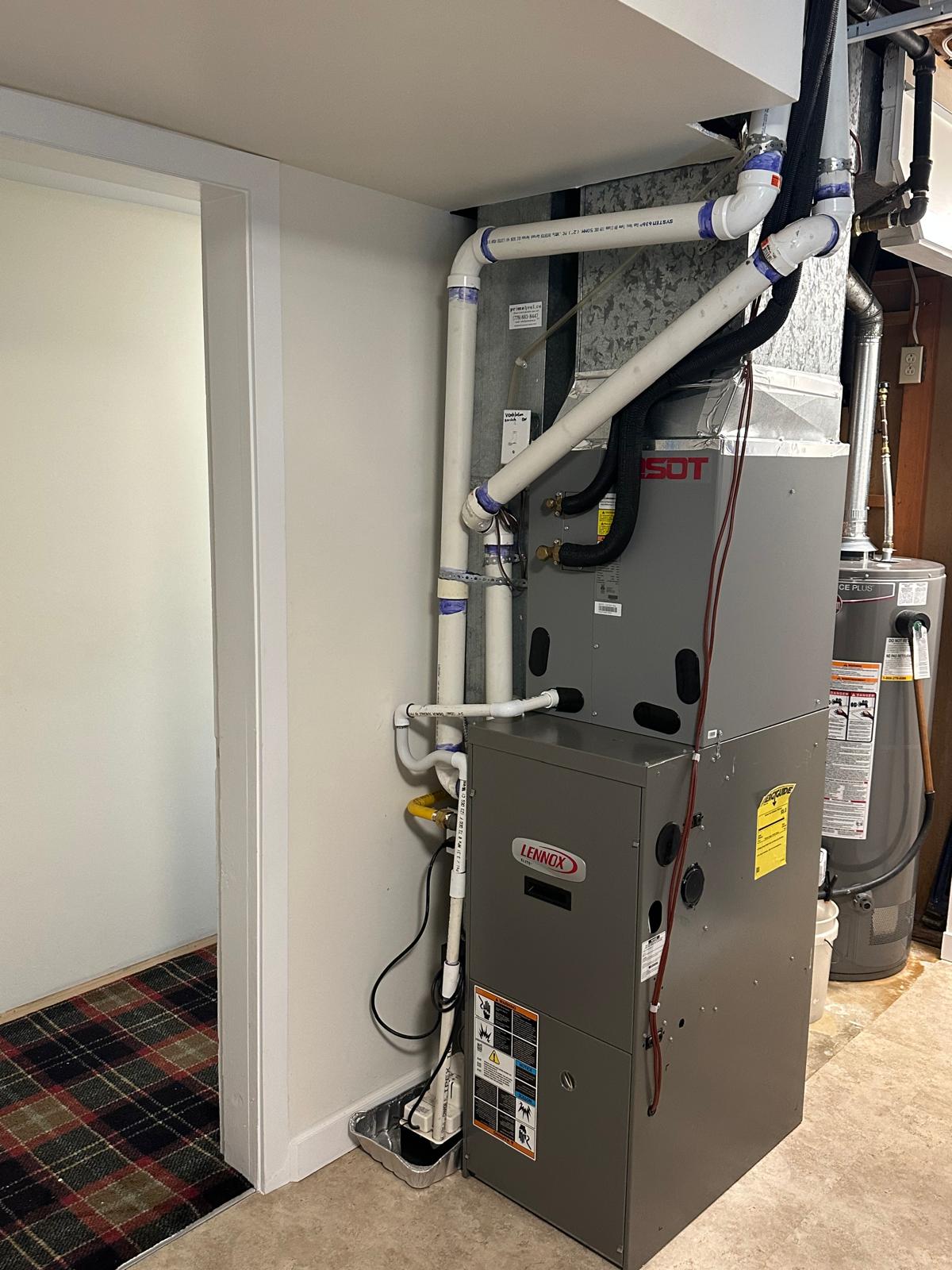



A furnace pressure-switch fault can stop the heating sequence before the burners ever ignite. The pressure switch is part of the furnace safety chain: it confirms that the inducer and venting system are creating the conditions required for safe combustion before ignition is allowed.
What “pressure switch stuck open” means
On many gas furnaces, the control board starts the inducer motor first. The pressure switch is expected to change state only after the inducer establishes the required draft. If that confirmation does not occur, the board can stop the ignition sequence and display a fault code rather than allow the burners to operate.
The fault message does not automatically mean the pressure switch itself has failed. A technician also considers the inducer, venting, condensate drainage, tubing, pressure ports, heat-exchanger airflow conditions and control wiring before condemning the switch.
Common causes technicians investigate
- Restricted intake or exhaust: a venting restriction can prevent the inducer from establishing the required pressure.
- Condensate drainage problems: high-efficiency furnaces depend on proper condensate flow; a restriction can affect pressure-switch operation.
- Inducer performance: a weak or failing inducer may run without producing the draft expected by the control system.
- Pressure tubing or port issues: damaged tubing, moisture or a restricted sensing port can interfere with the pressure signal.
- Electrical or control faults: wiring, connectors or board logic can create a pressure-switch code even when the mechanical switch is not the root cause.
- Pressure-switch failure: the switch itself can eventually fail, but it should be evaluated in the context of the entire draft system.
Why replacing the switch first can be the wrong diagnosis
A pressure switch is a safety device, not simply an on/off convenience control. Replacing it without determining why the expected draft condition was not proven can leave the underlying venting or inducer problem unresolved. The correct repair follows the cause of the failed safety check rather than the wording of the fault code alone.
Related symptoms
Homeowners may report that the inducer starts but the furnace never lights, the system repeatedly retries, a diagnostic LED shows a pressure-related code, or heat returns intermittently before the fault comes back. These symptoms overlap with other furnace problems, so the full operating sequence matters.
Professional furnace diagnosis in Metro Vancouver
Royal Pro Heating provides furnace repair and diagnostic service in Metro Vancouver. Related technical guides include our furnace ignition lockout guide and furnace high-limit switch guide.
Safety note
Pressure switches, venting and combustion-safety controls should not be bypassed or defeated. Diagnosis involving gas, combustion, electrical components or venting should be handled by a qualified HVAC or gas technician.
Frequently asked questions
Does a pressure-switch code always mean the switch is bad?
No. The code can be the result of a draft, inducer, venting, condensate, tubing, wiring or control problem.
Can a furnace run with the pressure switch bypassed?
The pressure switch is part of the furnace safety system and should not be bypassed. The reason it failed to prove safe draft conditions needs to be diagnosed.
Why does the furnace inducer run but the burners never light?
If the control board does not receive the expected pressure-switch confirmation, it can stop the sequence before ignition. Other safety or control faults can produce similar behavior.