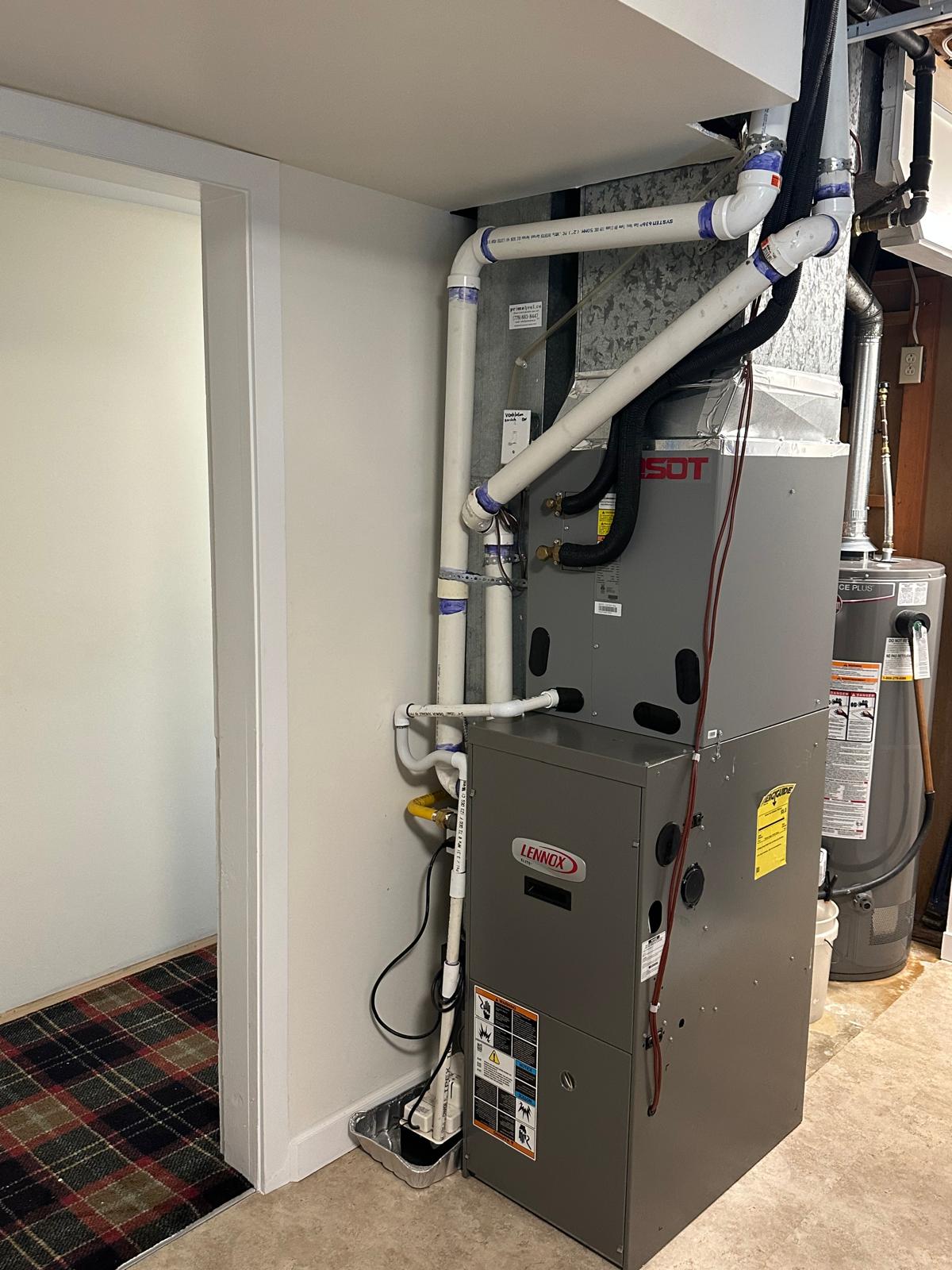



A furnace ignition lockout occurs when the control board stops further ignition attempts after one or more failed start sequences. The furnace may still run the inducer or blower, flash a diagnostic code, or remain inactive until the control resets.
Lockout is not the root cause. It is the control board’s response to a failed safety or ignition sequence. The correct diagnosis follows the sequence of operation from thermostat call to proven flame.
Typical Furnace Ignition Sequence
- Thermostat calls for heat.
- Inducer motor starts.
- Pressure switch proves venting.
- Igniter heats or sparks.
- Gas valve opens.
- Burners ignite.
- Flame sensor proves flame.
- Circulating blower starts after the programmed delay.
A failure at any stage can stop the sequence and eventually produce lockout.
1. Pressure Switch Does Not Close
The pressure switch verifies that the inducer and venting system are creating the expected negative pressure. Causes of a pressure-switch fault can include blocked venting, condensate restrictions, cracked tubing, a weak inducer, blocked drain traps or incorrect vent design.
The switch should not be bypassed. A technician should measure draft pressure and compare it with the switch rating and manufacturer specifications.
2. Igniter Failure
Hot-surface igniters can crack or fail electrically. Spark systems can suffer from electrode wear, poor grounding or control problems. A technician should verify that the control is sending the correct voltage and that the igniter responds as intended.
3. Gas Valve or Gas Supply Problems
If the igniter operates but burners do not light, the diagnosis may move to gas-valve operation, inlet gas pressure, wiring and appliance shutoff position. Static pressure alone is not enough; pressure under firing conditions can be more useful.
4. Flame Sensor Problems
A furnace may light normally and then shut the burners off a few seconds later if the flame sensor cannot prove flame. Common causes include oxidation on the sensor, poor burner grounding, wiring faults or weak flame-signal current.
Cleaning the sensor can help when contamination is the issue, but repeated flame-sense faults require checking combustion stability, grounding and microamp signal.
5. Venting and Condensate Faults
High-efficiency furnaces depend on correct intake and exhaust venting plus reliable condensate drainage. Water trapped in pressure tubing, blocked drains, sagging vent pipes or outdoor terminations obstructed by debris can interrupt the pressure-proving circuit.
6. Control Board and Wiring Issues
Loose connectors, corroded terminals, damaged harnesses or a failing control board can interrupt the ignition sequence. The diagnostic code is useful, but it should be interpreted together with voltage measurements and the exact stage where the sequence stops.
How Technicians Diagnose Lockout
- Read the fault code before resetting power
- Observe the complete sequence of operation
- Measure inducer and pressure-switch performance
- Verify igniter operation
- Check gas-valve voltage and gas pressure where required
- Measure flame-sensor current
- Inspect venting and condensate drainage
- Confirm furnace grounding and wiring integrity
Why Repeated Power Cycling Is Not a Repair
Turning power off and on may temporarily clear a soft lockout, but it also erases useful diagnostic evidence and does not correct the underlying fault. If lockout returns, the system should be tested before more parts are replaced.
Metro Vancouver Furnace Service
Royal Pro Heating Ltd. provides furnace repair and diagnostic service across Metro Vancouver. Homeowners can also review our furnace high-limit diagnostic guide for another common furnace fault pattern.
Frequently Asked Questions
Why does my furnace light and then shut off?
A common cause is loss of flame signal, but venting, gas pressure, burner grounding and control issues can create similar symptoms.
Can a dirty flame sensor cause lockout?
Yes. If the control cannot prove flame after ignition, repeated failed trials can lead to lockout.
Should I keep resetting the furnace?
No. Repeated resetting can hide the fault pattern. The diagnostic code and failed stage should be identified first.
Bottom Line
Ignition lockout is best diagnosed as a sequence problem. The fastest route to the correct repair is to identify exactly where the furnace stops between thermostat call, vent proving, ignition, gas flow and flame confirmation.