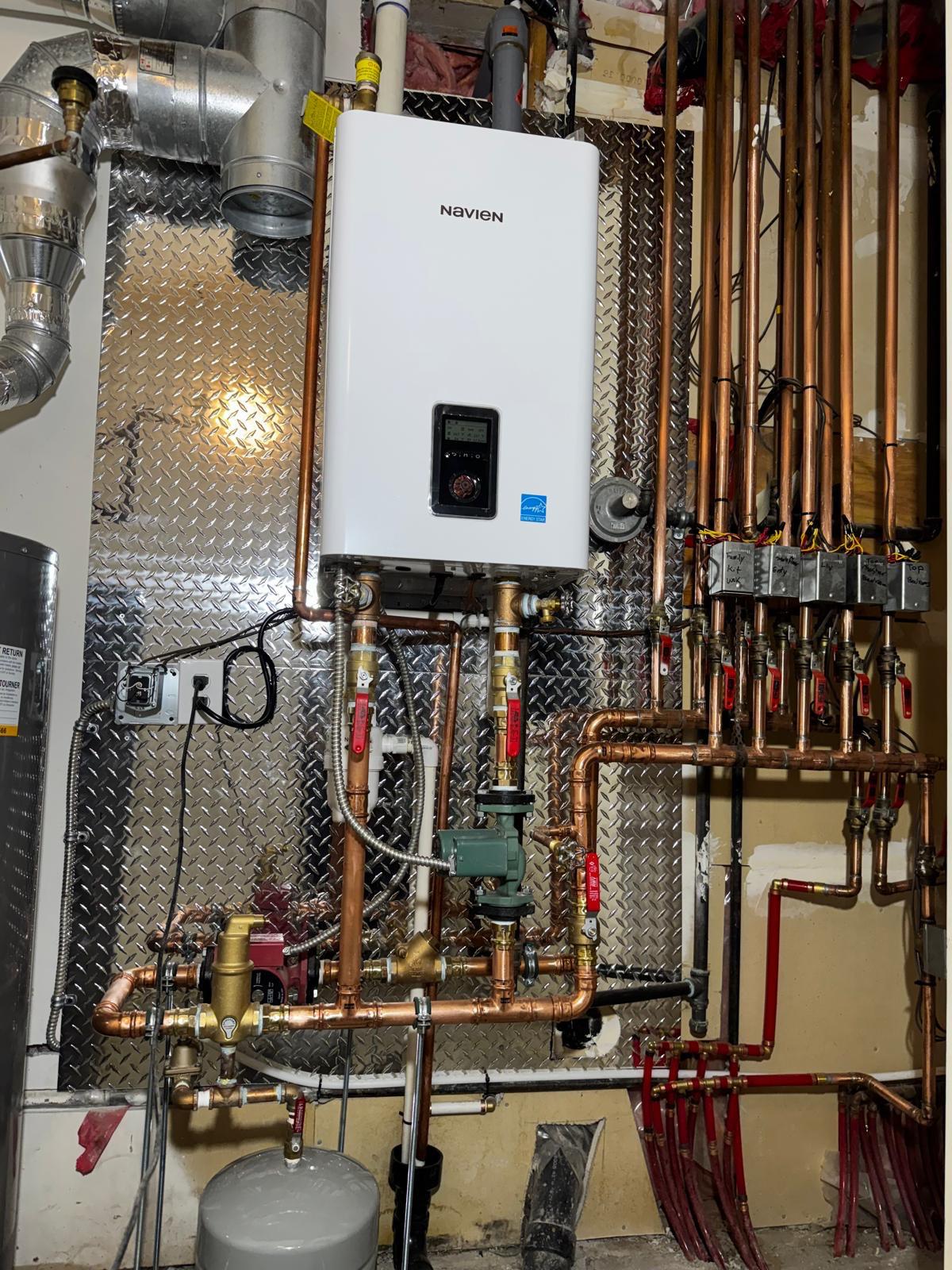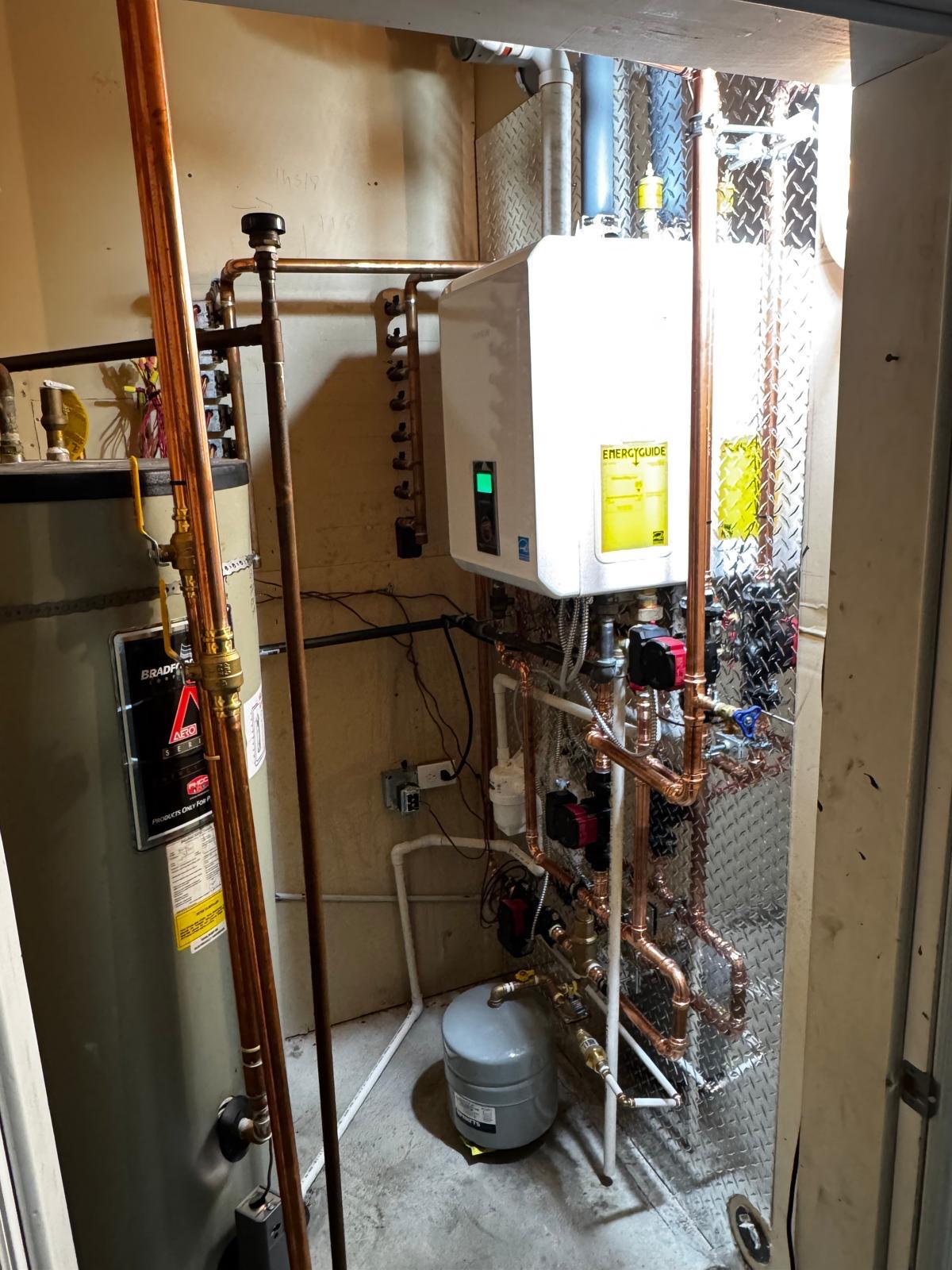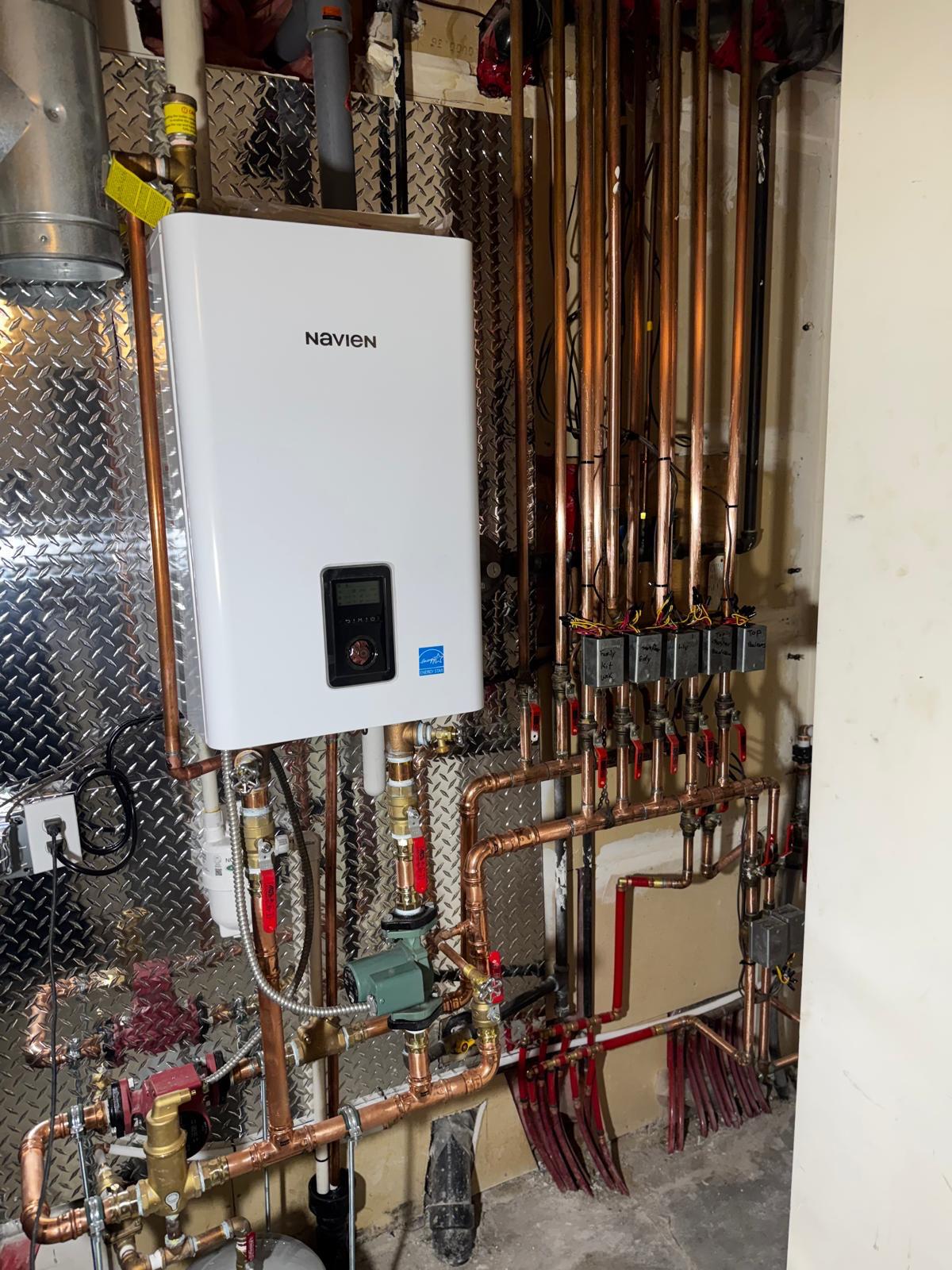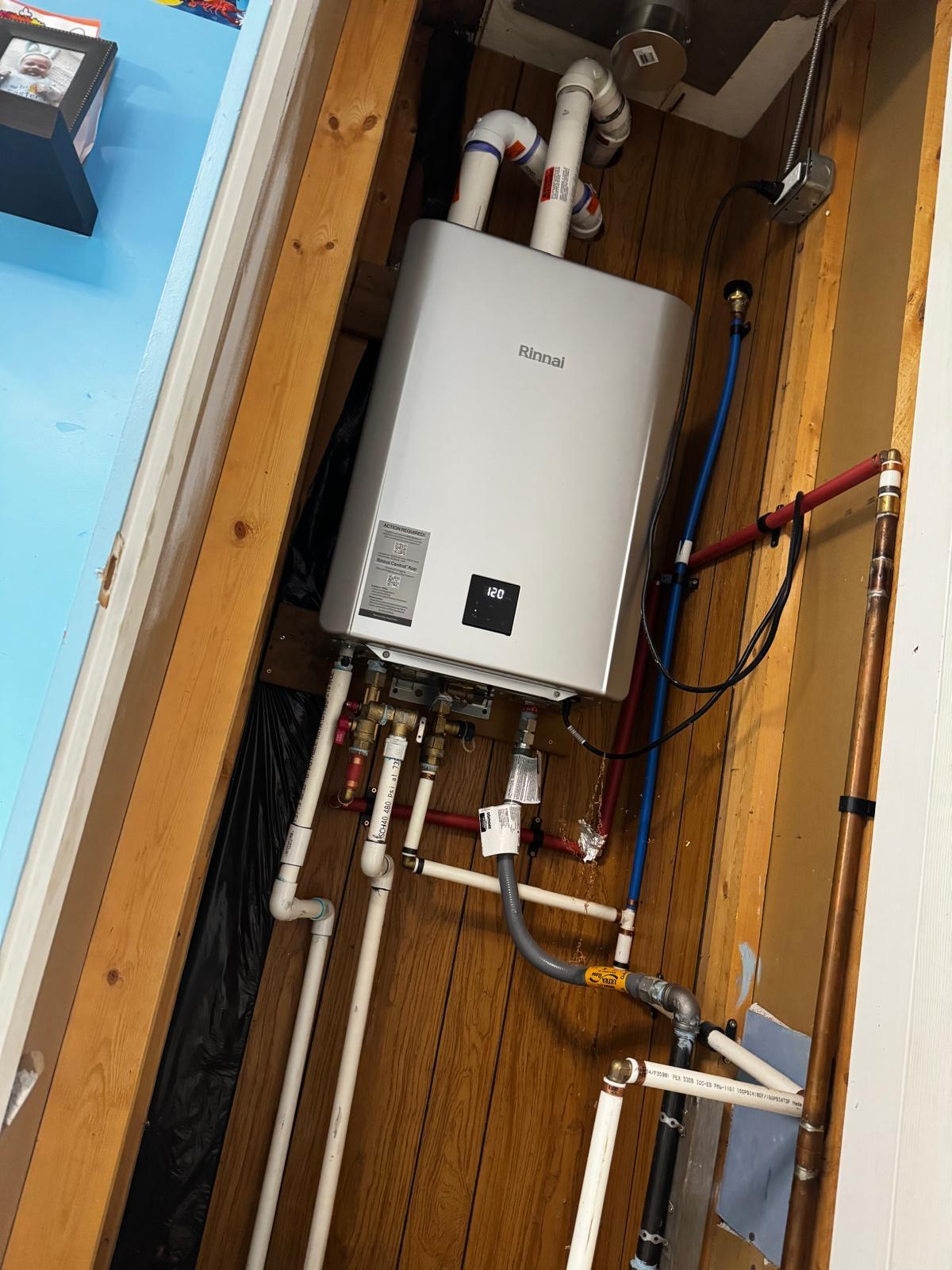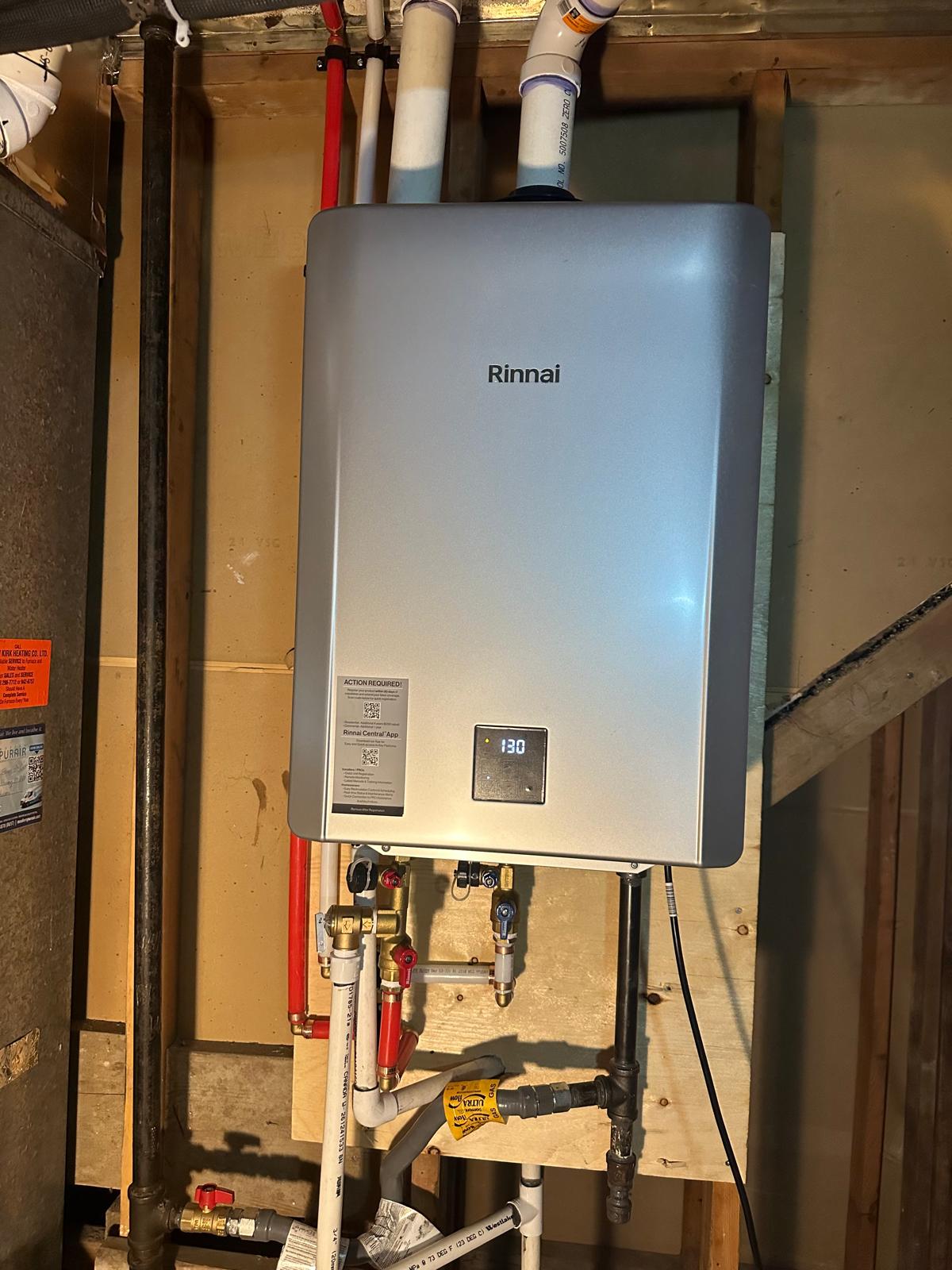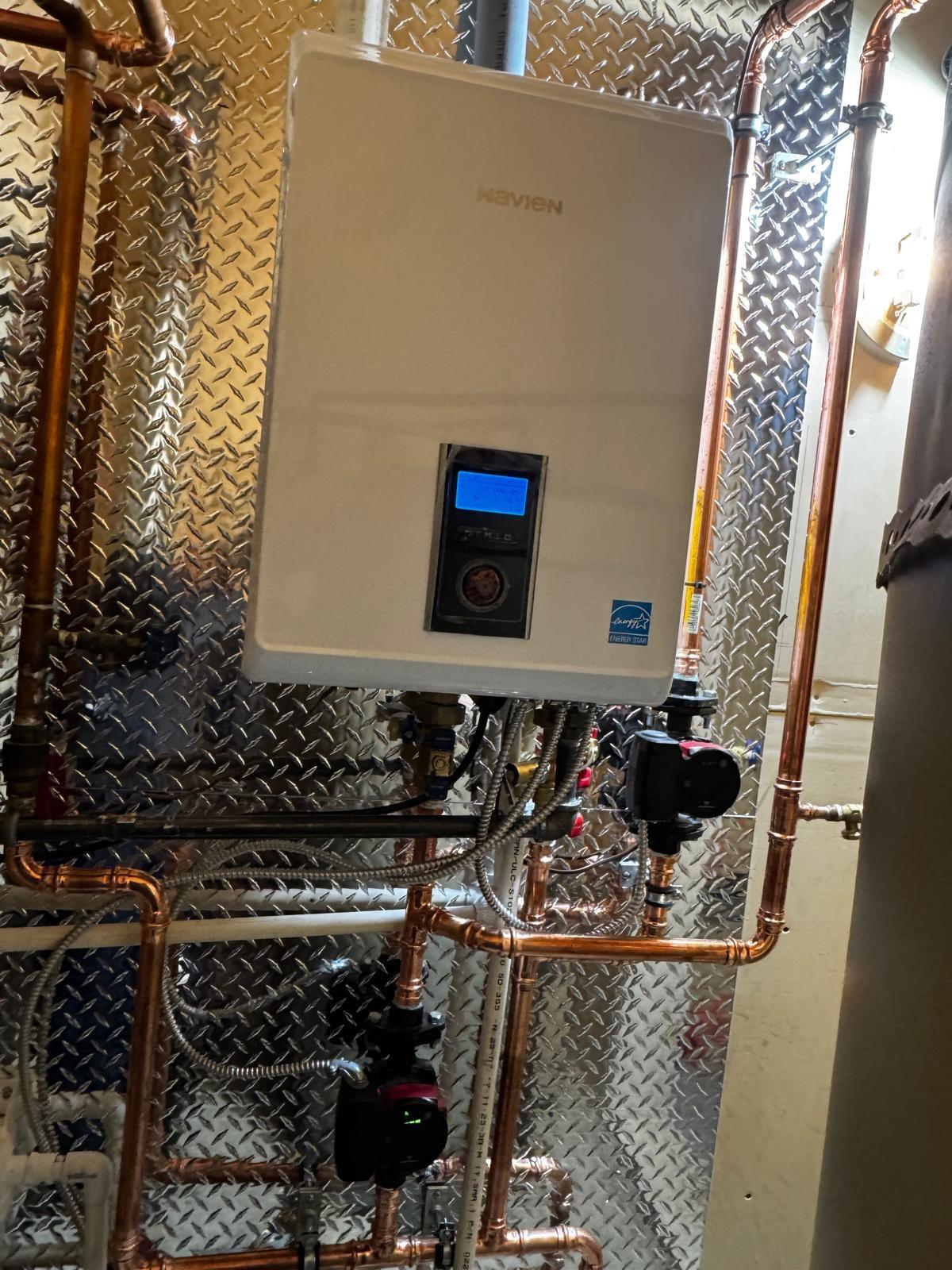



A tankless water heater can provide long-duration hot water, but only when the unit is selected and installed for the actual demand of the home. Three engineering factors determine whether a system performs properly: required hot-water flow, temperature rise and available heating input. Gas supply, venting, water quality and recirculation design then determine whether the equipment can deliver that performance reliably.
Homeowners often focus on the advertised gallons per minute. That number is useful only when it is tied to a specific temperature rise.
Flow Rate and Temperature Rise Work Together
Tankless capacity is governed by the amount of heat required to raise incoming water to the desired outlet temperature. The colder the incoming water, the larger the temperature rise and the lower the maximum flow the heater can support at a given firing rate.
For example, a unit may deliver a high flow rate at a modest temperature rise but substantially less when incoming water is cold and the outlet target is high. This is why one advertised flow number should not be used as the complete sizing method.
Estimate Simultaneous Hot-Water Demand
The design should consider fixtures that may operate at the same time, not just the total number of bathrooms. Typical loads can include showers, faucets, dishwashers and washing machines.
A household where two showers routinely operate together needs a different design from a household with the same number of fixtures but little simultaneous demand.
Gas Input Requirements Can Be Significant
Gas-fired tankless water heaters can have much higher maximum input rates than conventional storage water heaters. The existing gas line must be evaluated for the total connected load, pipe size, length, allowable pressure drop and other appliances on the system.
A unit that is starved for gas may not reach full fire and can show ignition, combustion or performance problems. Increasing appliance capacity without checking the gas-distribution system is not a complete installation.
Gas Pressure Is Not the Same as Pipe Capacity
Static gas pressure measured with appliances off does not prove that the piping can support full demand. Technicians may need to check pressure while the tankless unit and other significant gas loads are operating.
The correct pipe-sizing method depends on fuel type, system pressure, developed length, fittings and code requirements.
Venting Must Match the Exact Appliance
Tankless water heaters use manufacturer-approved vent materials and configurations. Requirements vary between condensing and non-condensing models.
Important venting factors include:
- Approved pipe material and diameter
- Maximum equivalent vent length
- Number and type of elbows
- Intake-air arrangement
- Termination clearances
- Condensate management for condensing units
- Support and slope requirements
Changing a vent route or adding elbows can affect allowable length and appliance operation.
Condensing vs. Non-Condensing Tankless Units
Condensing tankless units extract more heat from combustion products and produce acidic condensate that must be drained appropriately. Non-condensing units typically have hotter exhaust and different vent requirements.
Installation decisions should therefore consider more than equipment efficiency. Drain location, vent path, freeze protection and service access all matter.
Water Pressure and Minimum Flow
Tankless units require sufficient water flow to activate and modulate. Very low-flow fixtures, partially blocked aerators, crossover plumbing or pressure problems can create unstable operation.
At high demand, pressure loss through the heater and piping can also affect fixture performance. A good installation considers both heating capacity and hydraulic performance.
Water Quality and Scale
Mineral scale can reduce heat transfer and increase pressure drop through the heat exchanger. The rate of scale formation depends on water chemistry, temperature, usage and maintenance.
Service requirements should follow the manufacturer’s recommendations. In areas or homes with scale concerns, water treatment and periodic heat-exchanger flushing may be appropriate.
Recirculation Changes the Design
A recirculation system can reduce the wait for hot water, but it adds piping heat loss and changes pump and control requirements. Continuous recirculation can waste energy if the piping is poorly insulated or the control strategy is not appropriate.
Some tankless models include recirculation controls or pumps; others require external components. Compatibility should be verified before installation.
Cold-Water Sandwich and Temperature Fluctuation
Some users notice brief temperature changes when hot-water demand stops and restarts. Causes can include residual hot water in the piping, burner activation delay, minimum flow thresholds or recirculation design.
Persistent fluctuations should be diagnosed rather than assumed to be an unavoidable feature of tankless technology.
Common Causes of Poor Tankless Performance
- Unit undersized for simultaneous demand
- Gas line too small for full input
- Blocked intake or exhaust
- Incorrect vent configuration
- Scale in the heat exchanger
- Dirty inlet-water filter
- Low water pressure
- Incorrect recirculation setup
- Sensor or flow-meter faults
- Combustion or ignition problems
How a Technician Evaluates a Tankless System
A complete assessment may include:
- Measuring hot-water flow at fixtures
- Checking incoming and outlet water temperatures
- Comparing required temperature rise with model capacity
- Checking gas pressure under load
- Reviewing gas-pipe sizing
- Inspecting intake and exhaust venting
- Checking condensate drainage
- Reviewing diagnostic history and error codes
- Inspecting inlet filters and scale condition
- Testing recirculation controls where applicable
Replacement Is a System Design Decision
Replacing a storage tank with a tankless heater may require changes to gas piping, venting, electrical supply, condensate drainage and water piping. The correct quote should identify those requirements before work begins rather than treating the project as a simple appliance swap.
Royal Pro Heating Ltd. provides tankless water heater repair and service throughout Metro Vancouver. Homeowners considering Rinnai replacement can also review our Rinnai Water Heater Replacement in Coquitlam page.
Frequently Asked Questions
How many GPM do I need?
The correct flow rate depends on simultaneous fixture demand and required temperature rise. Fixture count alone is not enough.
Can I use my existing gas line?
Possibly, but it must be checked for the tankless unit’s maximum input plus other connected appliances. Existing pipe size does not automatically mean adequate capacity.
Why does my tankless heater go cold during use?
Possible causes include excessive flow demand, low gas supply, scale, blocked filters, sensor faults or control issues. Diagnosis should compare actual flow, temperatures and firing rate.
Do tankless heaters need maintenance?
Yes. Maintenance depends on model, water quality and usage and may include inlet-filter cleaning, inspection and descaling according to manufacturer guidance.
Bottom Line
A reliable tankless installation starts with load calculation rather than the appliance box. Flow rate, temperature rise, gas capacity, venting, drainage and water quality must work together. When those fundamentals are correct, tankless systems can provide consistent hot-water performance without relying on oversized equipment or guesswork.